

Your business is the effective culmination of many different things. Ideas, resources, employees, and most importantly, hybrid cloud observability tools. For the purpose of this article, we will be looking at those tools which you use to drive your business forward, and hopefully help you find new ways to achieve that.
In this regard, making sure you’re equipped as well as possible may make the difference between a successful or failed enterprise. Look at it this way. Your IT technicians are the backbone of your network infrastructure. They create, manage, and monitor every aspect of it. Every single mistake has the potential of cascading down as a butterfly effect and impacting your users significantly.
If your business is large enough, this can be very costly. Your technicians need to check a lot of bits of data, variables, and cross-reference information intelligently and comprehensively to stay on top of all of these issues, making sure that everything is running smoothly. This is why making their experience with dealing with all of these issues as easy and comprehensively as possible is key for a smooth running operation.
If you optimize your technicians’ quality of life within the environments they work in, they will make far fewer mistakes, therefore in the long run making your business far more streamlined, safe, and profitable. Not only that, but the tools also offer safety features that decrease your risk of any potential malicious actors causing damage to your business.
These tools offer a lot of variety, and knowing which one is best for you and your needs can be tricky. We have presented a variety of different tools here for you with unique strengths and weaknesses.
The Best Hybrid Cloud Observability Tools
1. Site24x7 – EDITOR’S CHOICE
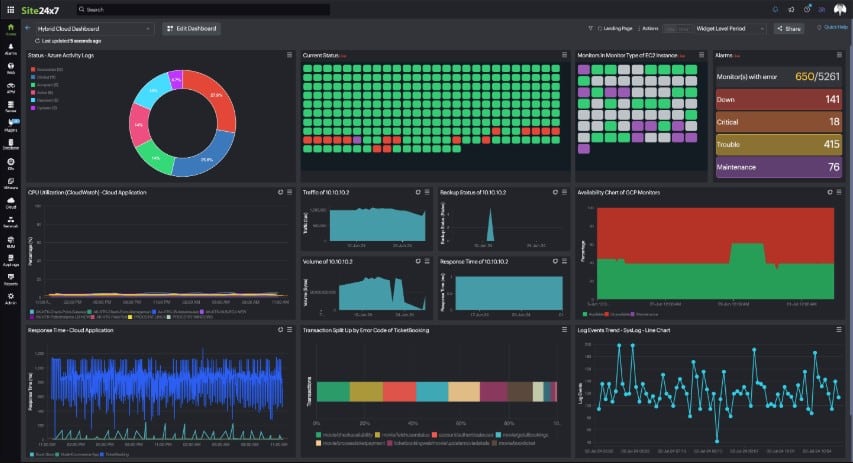
Site24x7 provides hybrid observability across local infrastructure and cloud environments from one platform. It tracks applications, network devices, servers, databases, and user-facing services whether they run on premises, in the cloud, or across a mixed environment.
Support for AWS, Azure, and Google Cloud lets the service work across multi-cloud and hybrid deployments without forcing administrators to switch between separate tools. The platform combines cloud metrics with traditional infrastructure monitoring, which makes troubleshooting and performance review more coherent.
Application health, user activity, latency, response times, and error conditions are all part of the operational view. That wider sampling makes it easier to correlate symptoms across layers and find the point where a service problem begins.
A local data collector links the platform to the on-site environment, while the hosted console brings cloud and on-premises signals into the same place. You can try Site24x7 through a 30-day free trial.
EDITOR'S CHOICE
Site24x7 is our top pick for a hybrid cloud observability tool because it correlates data from both cloud and on-premises environments inside one monitoring service. It supports AWS, Azure, and Google Cloud, while also covering applications, networks, servers, databases, and user experience metrics. Automatic discovery, deep application insights, and proactive alerts help teams move faster from anomaly to root cause. For organizations that need broad visibility across hybrid infrastructure without maintaining multiple disconnected tools, Site24x7 is a strong choice.
Download: Start a 30-day FREE Trial
Official Site: https://www.site24x7.com/signup.html?pack=44&l=en&lp=1
OS: Cloud-based
2. ManageEngine Applications Manager – FREE TRIAL
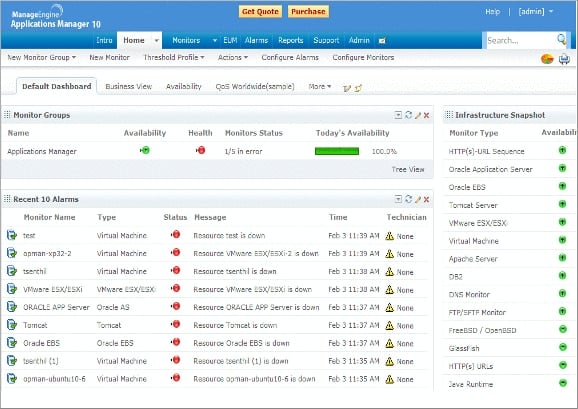
ManageEngine Applications Manager provides excellent visibility into your cloud and on-prem environments. Using this tool, you can gain complete insights into the health and performance of your applications, so you can take proactive steps to address vulnerabilities before they turn into major issues. Moreover, it generates in-depth information, using which you can troubleshoot existing issues faster, saving time and money.
It also improves DevOps processes by correlating performance changes with code commits. In the process, it also provides control and visibility to DevOps engineers to improve their overall productivity.
With such features, you can have detailed onbservability into your hybrid environments. Start a 30-day free trial.
3. ManageEngine OpManager Nexus – FREE TRIAL
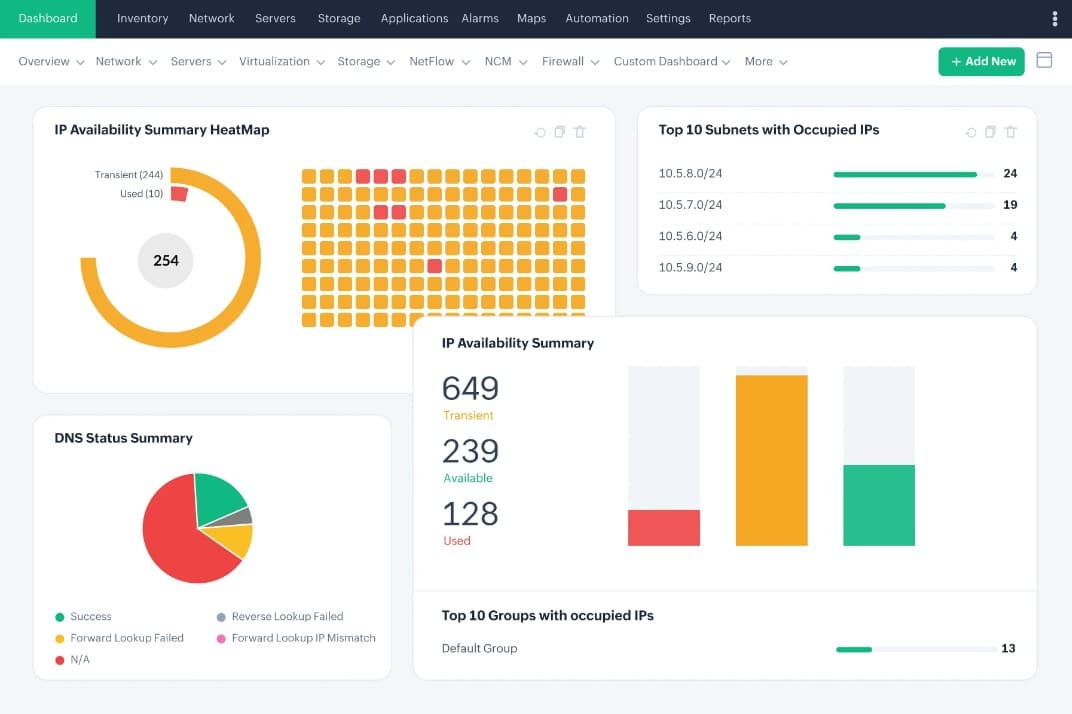
ManageEngine OpManager Nexus, formerly OpManager Plus, is well-suited for monitoring hybrid cloud environments. It works well with leading platforms, like AWS, Azure, GCP, Oracle Cloud, and more, to gather telemetry and analyze it to provide a comprehensive view of your infrastructure’s state and performance. It also automatically discovers and configures your entire cloud ecosystem, all within minutes.
A key advantage of OpManager Nexus is that it offers visibility into the dependencies that exist among cloud providers and their impact on your costs and performance. Armed with this information, you can make informed decisions about usage levels. It even allows you to drill down into each monitored cloud component to monitor the different metrics.
OpManager Nexus provides a centralized view of all the variables impacting the performance of your cloud services. This data will come in handy for setting appropriate thresholds to make the monitoring values more meaningful.
This platform starts at $1,233 for 50 devices. Start a 30-day free trial.
4. AppDynamics
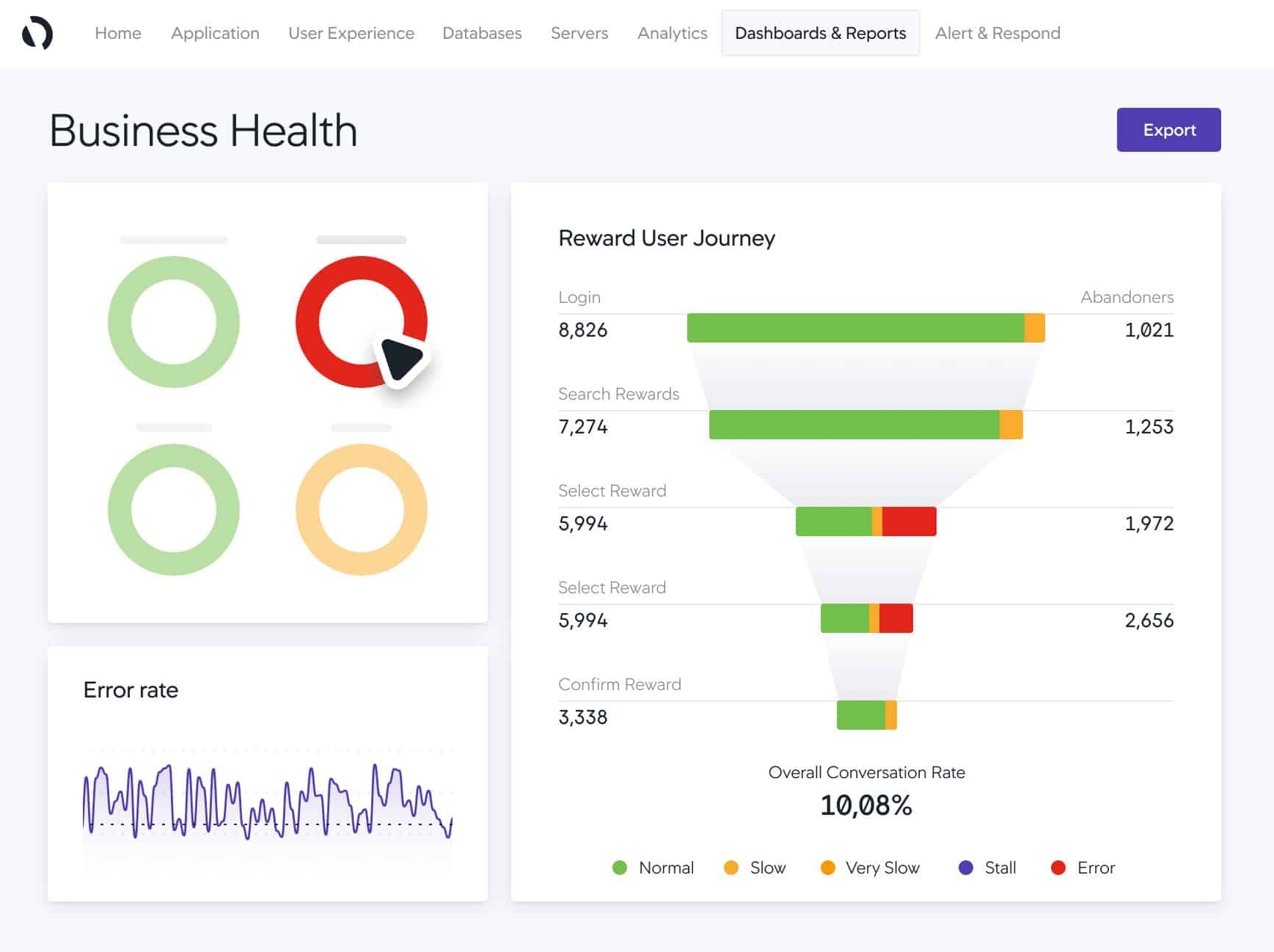
Ciscos’ AppDynamics offers you full-stack observability that provides you with an intuitive monitor for all your vital performance metrics. It comes as an on-premises platform, SaaS, and Cloud. This allows you to cover all potential network configurations you may be running with ease.
It allows you to monitor infrastructure, databases, end users, applications, and business performance with ease. AppDynamics provides you with a clear oversight into all of these key metrics and allows you to act upon any issues accordingly. It identifies the root of any issue in real-time which allows you to act in moments when it’s most critical, hopefully before it reaches the end-users.
AppDynamics is available for purchase in four different plans. The Infrastructure Monitoring, Premium, Enterprise, and Real User Monitoring plans. Furthermore, you may opt for a 15-day free trial of the SaaS version to give it a test run.
5. Zenoss
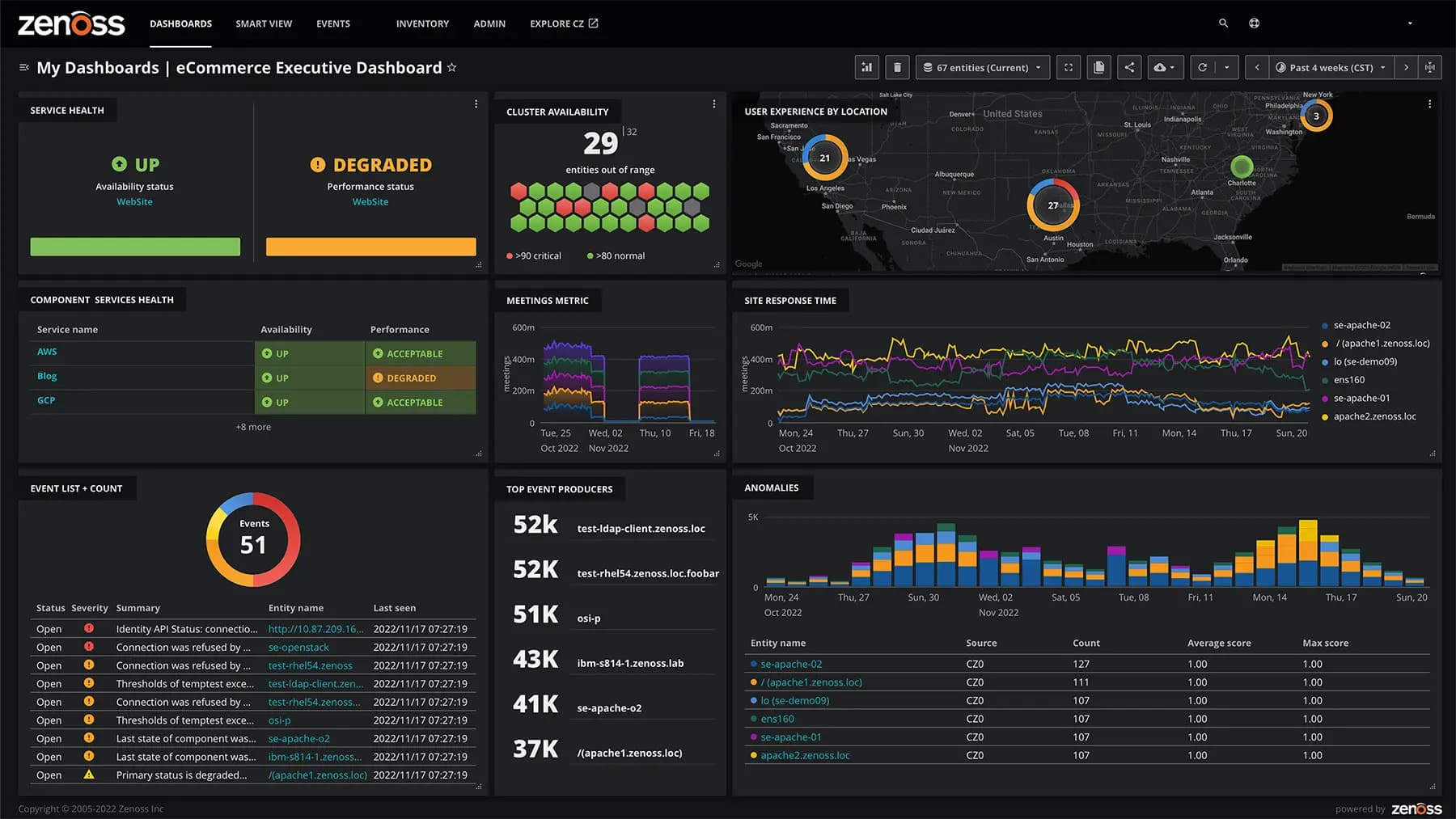
Zenoss is a SaaS tool that provides full-stack visibility, as well as AIOps. It provides you with keen insights and visibility into any network type, regardless if it is public, private, or hybrid. Zenoss monitors in real-time and offers you quick feedback on any issues that may pop up within your infrastructure.
Infrastructure monitoring with the support for public, private, and hybrid clouds and real-time dependency mapping.
Server monitoring with support for common metrics, health, physical sensors like temperature sensors, file systems, processes, network interfaces, and routes monitoring. Zenoss utilizes a feature called ZenPacks which allows you to monitor practically anything. They are plug-ins that use standard APIs and protocols. These include SNMP, WinRM, and SSH. This way you can always keep your monitoring information relevant and precise. Note that there are four different types of ZenPacks. Commercial, Open Source, Community, and Subscription. This way you can be assured that every possible specific niche has been covered or has the capacity to be covered by a custom-tailored ZenPack that you can even make yourself to monitor your custom equipment. You can get a demo by having your organization contact Zenoss to gain access to it. Similarly, Zenoss has two different plans called Zenoss Cloud Professional, and Zenoss Cloud Enterprise. Both of these require your organization to contact them in order to get a quote.
6. Dynatrace
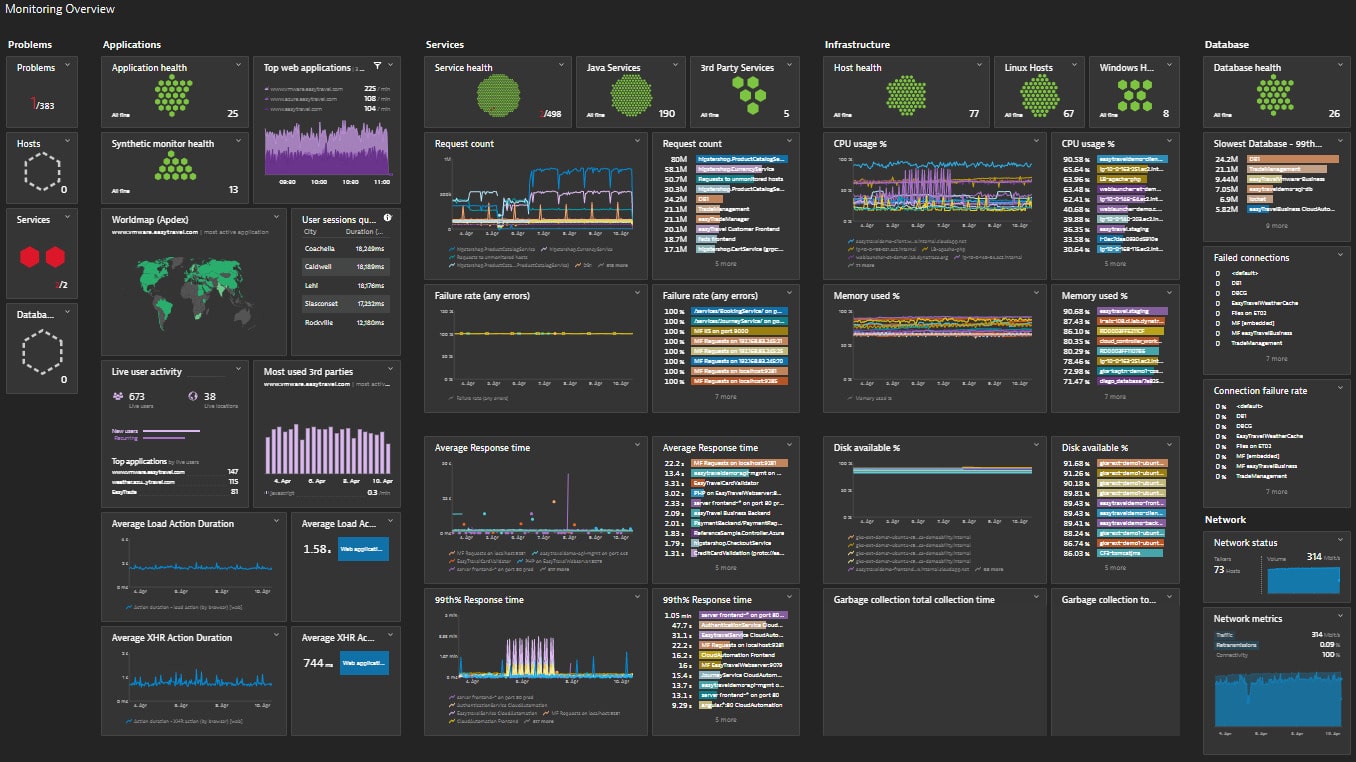
Dynatrace usually comes as a SaaS-based monitoring tool, altho you can get it as an on-premises option as well. It allows you to monitor and manage infrastructure, microservices, mobile applications, and more. It offers over 600 third-party integrations to make sure all of the specific needs of your business are covered. Furthermore, you can use the Dynatrace API, SDK, or plugins for further integrations if necessary. It also comes with an AI engine that allows you to detect and identify any problems that may arise, and offer pinpoint precision in how to deal with them. Dynatrace is available in six different plans. The Full-Stack Monitoring, Infrastructure Monitoring, Digital Experience Monitoring, Application Security, Open Ingestion, and Cloud Automation plans. It also comes with a 15-day free trial which doesn’t require a credit card for you to get access to.
7. Sematext Cloud
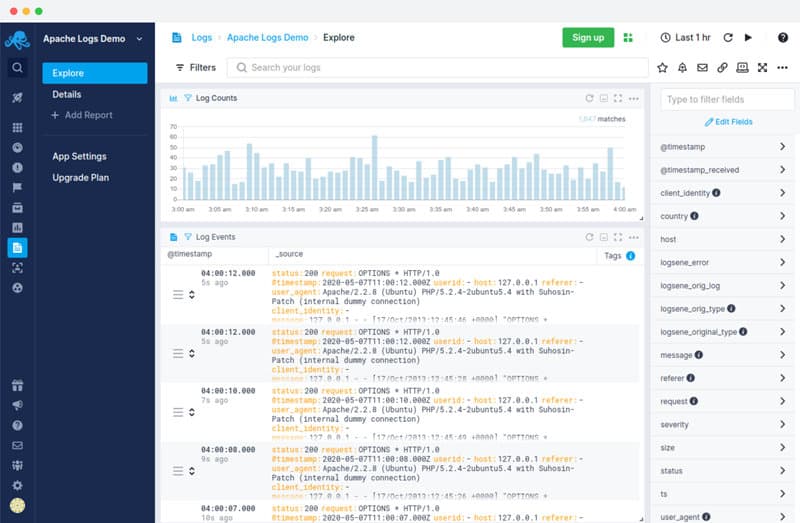
Sematext Cloud allows you to monitor public, private, and hybrid cloud environments. It provides you with a unified view of all of your important assets. It covers your servers, applications, performance, service availability, and logs. It can integrate with almost anything thanks to its autodiscovery features. You can deploy it anywhere, from bare metal to Kubernetes and Docker, to virtual machines. It has a Machine Leaning-based alerting and notifications system which allows you to get informed quickly and precisely on any issues or problems that may arise within your infrastructure. It offers a 14-day free trial that requires no credit card to access. Furthermore, it has very flexible pricing plans. It has four categories that each diverge into three separate sub-categories that range from Basic, Standard, and Pro. These categories are Logs, Monitoring, Experience, and Synthetics. This way you can mix and match the pricing plans to custom-tailor the tools for your needs.
8. New Relic
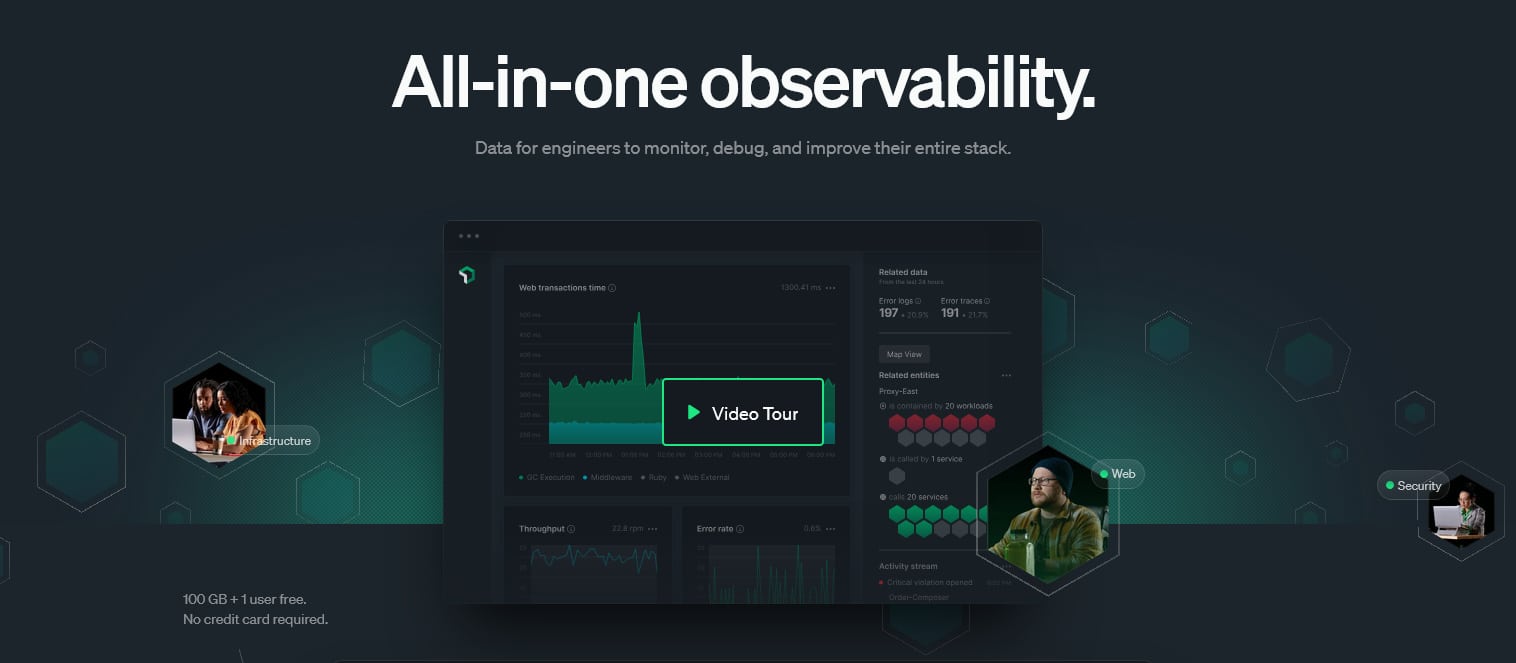
New Relic is a SaaS tool that provides you with full-stack monitoring across your infrastructure, networks, Kubernetes environments, applications, and more. With over 450 different third-party integration, you can rest assured knowing that New Relic has all of your potential specific needs in mind. It also offers log management, error tracking, and intelligence that allows you to track down and identify the root cause of any issue that may arise. New Relic has four different subscription plans. It offers you with a choice between Free, Standard, Pro, and Enterprise plans.
9. Splunk
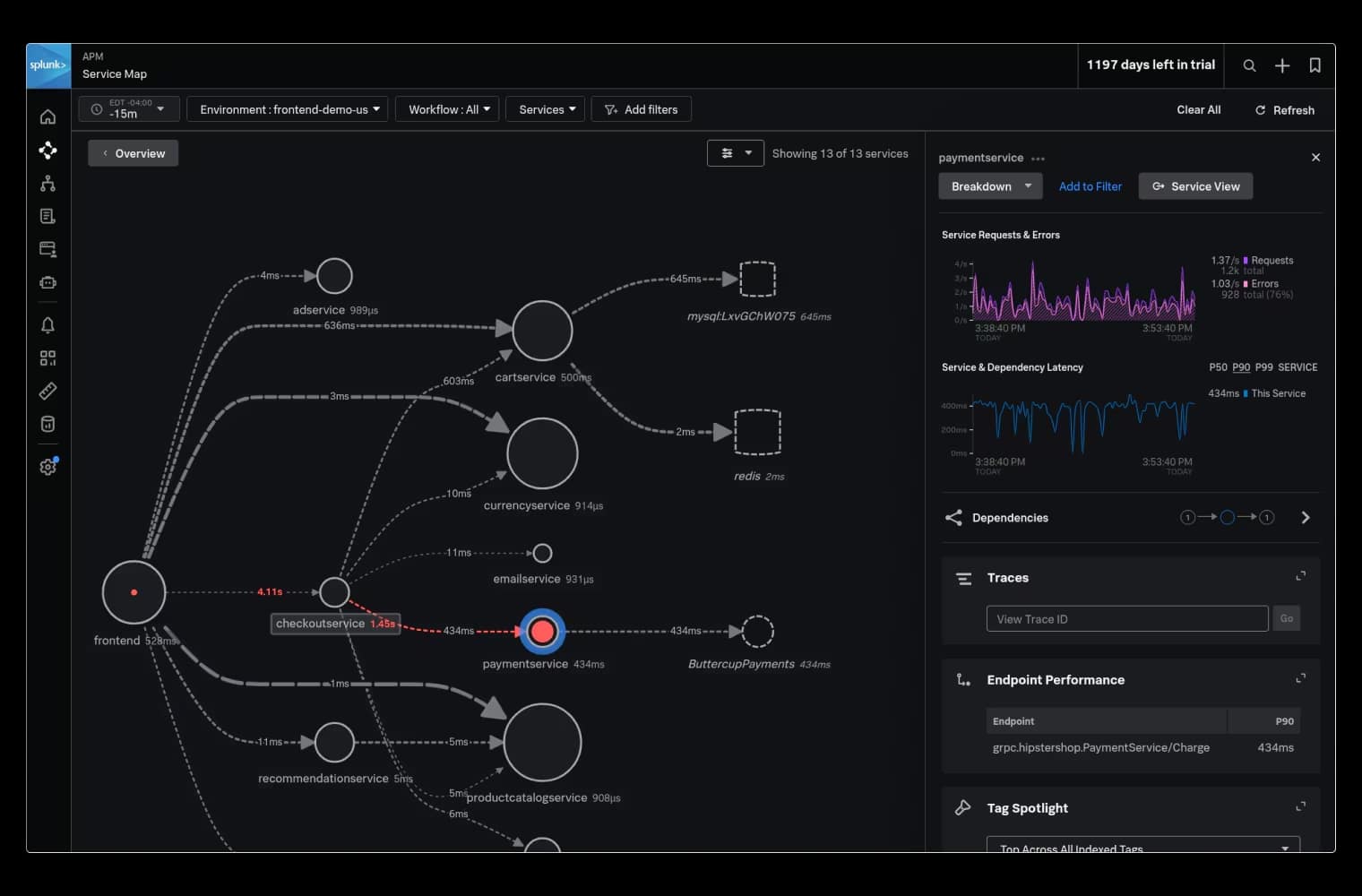
Splunk is available as a cloud service called Splunk Cloud Platform, and as an on-premises platform called Splunk Enterprise. It offers full-stack observability and supports more than 2,400 Splunkbase apps and add-ons. It allows you to monitor infrastructure, networks, applications, microservices, and third-party platforms. Splunk monitors data from nearly any source, this includes hybrid cloud, multi-cloud, and edge environments. The tool allows you to utilize its AI features to monitor all your vital areas in real time, track down, and identify issues. This allows for lightning-speed response time which will take a strain off of your technicians so they can focus on more critical issues. Splunk offers a variety of individual products, as well as the Spunk Cloud Platform, and the Splunk Enterprise plans. To get more pricing info, contact Splunk directly to discuss the plan price that will work best for you. Splunk also offers a 14-day free trial for the Splunk Cloud Platform. Furthermore, you can get another 14-day free trial for the individual products and a 60-day free trial for Splunk Enterprise.
10. SolarWinds Hybrid Cloud Observability
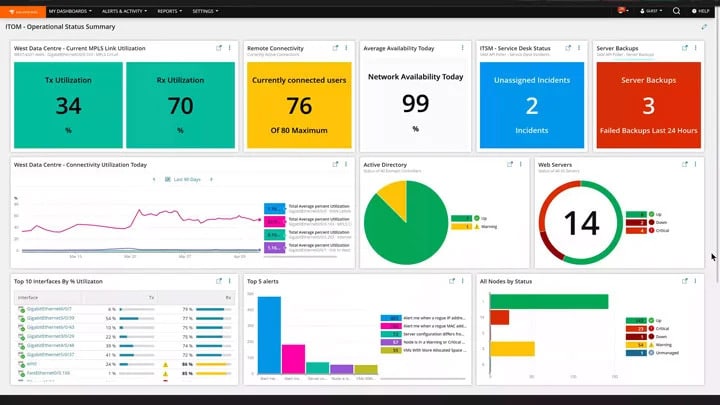
SolarWinds is a tool that offers full-stack cloud performance monitoring and is available as SaaS. It is simple and easy to use, with many implementations ready out of the box. The monitoring capacity that SolarWinds provides covers clouds, infrastructure, networks, databases, and applications. It eliminates clutter by making sure all of your important features are presented to you on a single screen. This way you eliminate tool sprawl that would cause potential confusion and time delays for your technicians. Furthermore, SolarWinds implements AIOps which allow you to have a quicker, more precise, and overall easier time diagnosing any issues that may arise within your infrastructure. It offers a free 30-day trial with full functionality. SolarWinds also comes in two different plans, the Essentials and Advanced plans. The cost scales per node and per month.
11. Sumo Logic
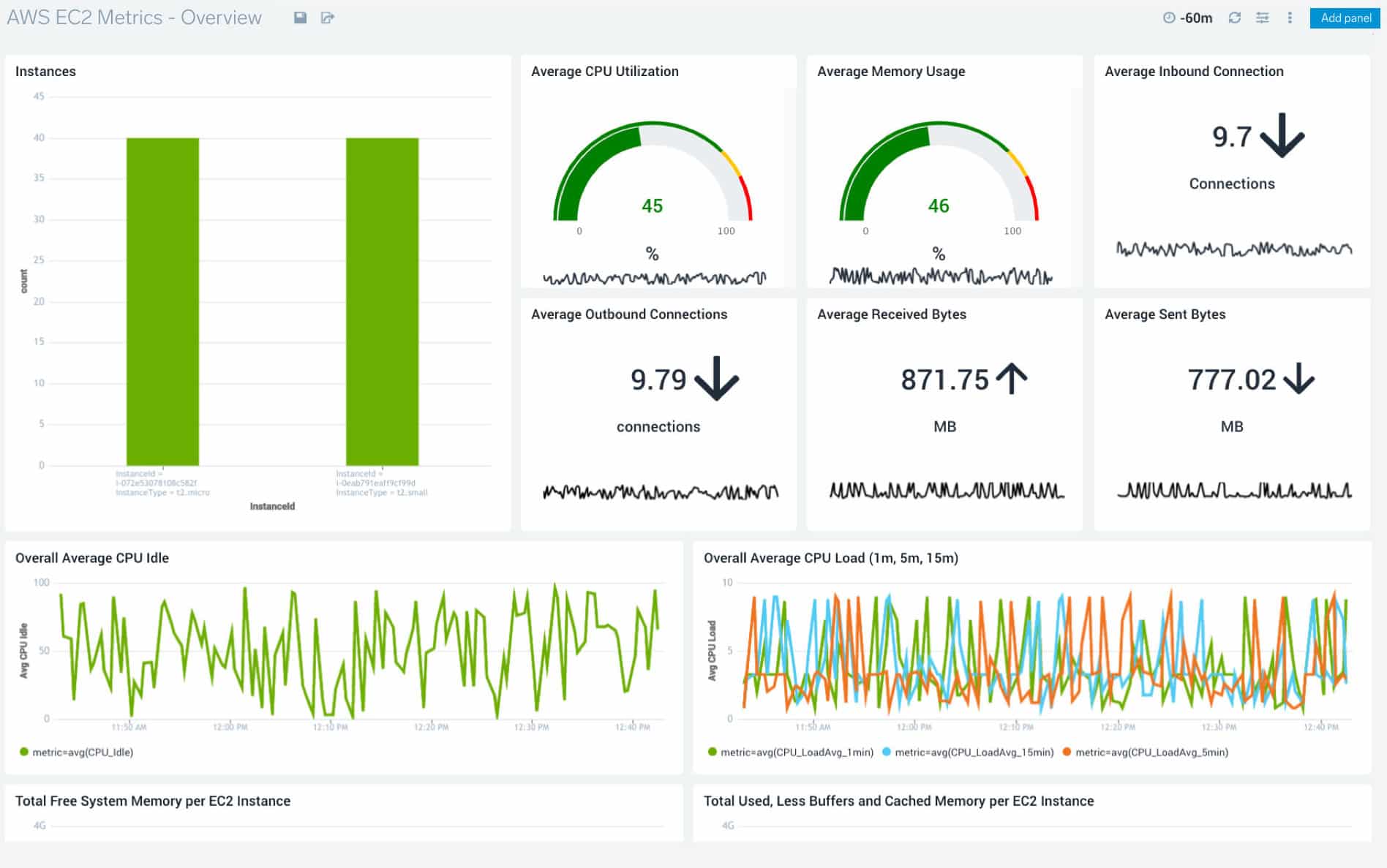
Sumo Logic is a cloud-based SaaS that helps you monitor and manage your network and infrastructure. It lets you monitor all the essential metrics in real-time, and it alerts you accordingly. It also has integrated cloud security features for all of the common cloud providers, as well as integrated threat intelligence designed to keep you safer from harm. It also puts a heavy emphasis on its logging tools. Sumo Logic comes with multiple logging tools such as LogReduce and LogCompare that allow you to optimize the time your technicians spend analyzing data. Firstly, LogReduce clusters data into a form that reduces clutter and increases comprehensiveness. This allows for a more streamlined experience where your technicians don’t have to pour hours over menial information that is very tedious to get through. Secondly, with LogCompare, you have the option to visualize two logs from different times and compare them to cross-reference information and discover any discrepancies that may be happening. Sumo Logic offers multiple plans for your business, and they are as follows: Free, Essentials, Enterprise Operations, Enterprise Security, and Enterprise Suite. It is worth mentioning that the free plan may be enough for very small businesses.
12. Grafana
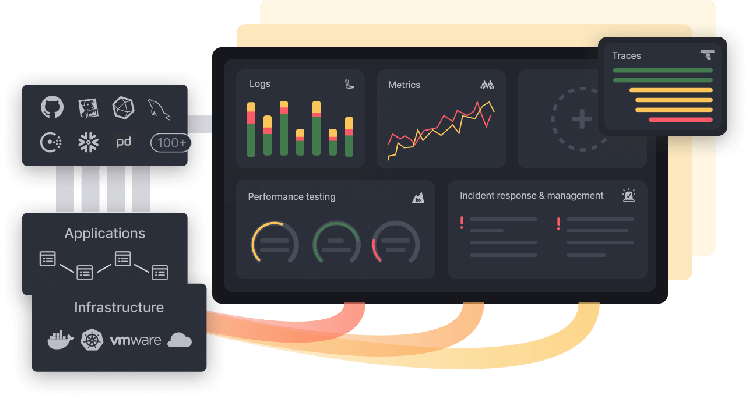
Grafana is available as both a cloud service and an on-premises platform. It is capable of providing you with a unified, single pane of glass overview, allowing you to comprehensively visualize all of your metrics, logs, and alerts. The interface is fully customizable and you can create a dashboard custom tailored to you and your needs. This can allow you to monitor all the important metrics such as infrastructure, applications, third-party platforms, microservices, and data sources. It comes in three different plans, Free, Pro, and Advanced. You can also request a free trial of the Grafana Cloud as an organization, or download the Enterprise or OSS editions for free.
13. Datadog

Datadog allows your monitoring to be deep and thorough. The information that Datadog provides is clear and easy to comprehend. Furthermore, it is presented on a single interface which will eliminate any clutter and make sure your technicians don’t need to multitask in order to accomplish their tasks. Paired with built-in support for more than 500 third-party integrations, and you have pretty much every possible need covered. Datadog is a SaaS platform, which means you don’t need to dedicate any resources on-premise, simply subscribe and start using it. It allows you to monitor a lot of essential metrics, such as infrastructure, databases, network performance, applications, and the full DevOps stack. Datadog has the Watchdog feature which is a tool that utilizes machine learning. Watchdog allows you to get insights into your applications and infrastructure, and helps you pinpoint any issues and troubleshoot them. Pair that with cross-team collaboration support, and you have a tool that can help you optimize the network for your business. Datadog offers various multiple plans that are far too extensive to cover. It allows you to pick any features that you need for your business. This way, you can optimize your plan and custom-tailor it to your needs and budget. Datadog also comes with a 14-day free trial so you can test out its features and see if it is the right tool for you.
Conclusion
We have covered a variety of tools here, all different, with unique features. Taking each and every one of them into consideration, hopefully, you have a clearer image of which product would satisfy your needs best. Whether it will be something that emphasizes real-time monitoring, using artificial intelligence to allow for more accurate troubleshooting or something that will make intelligent use of alerts to give you the most comprehensive data for analysis. Only you know what you need for your business enterprise, and hopefully, you found your answer within this article.